Episode Transcript
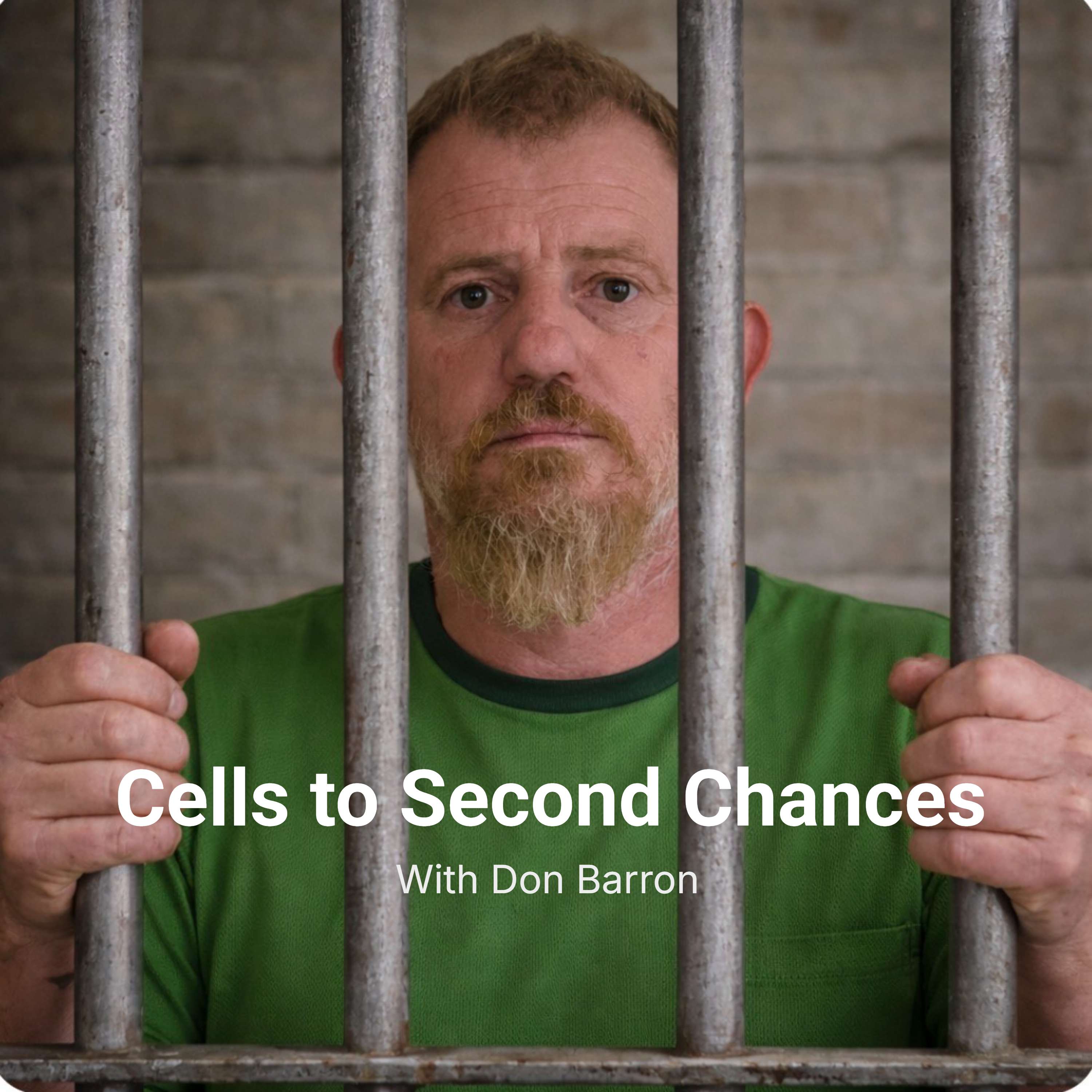
[00:00:01] Here we are, folks, my first actual podcast.
[00:00:05] Let's start off by saying I went to a good school near a broken hill and I absolutely hated school. I was not very good at school and it wasn't too late in my years in life that I learned that I had ADHD, but back then, I guess, you know, in the 70s, and that it wasn't recognized.
[00:00:28] So I went through school, but I always had an interest in crime, an interesting crime. I watched crime movies, mafia movies and things like that.
[00:00:39] And I thought I wanted to become a police officer.
[00:00:43] So, work experience.
[00:00:47] I hopped on a train with some other people and we went off to Goulburn Police Academy.
[00:00:52] We went there for two weeks to learn what it was like to be a police officer.
[00:00:59] I never finished year 12, I finished year 10 but never passed, so it was out of the question. And probably in hindsight it will be good. It was good because otherwise I'd end up like Roger Rogerson and become a corrupt police officer.
[00:01:17] But what happened was I left school, I ended up moving to Sydney.
[00:01:23] I got a job working at Dremoy Nissan as an apprentice mechanic.
[00:01:28] That didn't really go anywhere.
[00:01:31] I then moved to Gosford Head and Engine Services on the central coast of New South Wales.
[00:01:39] I worked for a chap by the name of Tony LePage and on my first day of working there, it's quite a funny story, he said, welcome to Gosford Head and Engine Services. We used to be called Gosford Head Jobs, but I had to change the name because lots of people used to call up with some stupid requests and I thought to myself, fancy calling yourself Gosford Head Jobs?
[00:02:05] So I worked there for a while.
[00:02:07] I then moved to Adelaide.
[00:02:10] Whilst in Adelaide, I was selling Kirby vacuum cleaners, if anyone remembers them, very expensive vacuum cleaner. But in hindsight they were quite good too.
[00:02:22] So I worked there for quite a while. I built up my sales skills and I left.
[00:02:27] And then back in those days when you went on the rock and roll the dole, you had to join up with the CES Commonwealth Employment Services.
[00:02:37] They offered me a position doing training for a computer course.
[00:02:42] I was always interested in computers. I'd previously bought an IBM compatible machine and was quite interested, so I thought that would be good to learn about computers, building them, etc.
[00:02:56] So they sent me off for a six month course. That six months was two weeks training, learning how to build a computer and what a computer was all about.
[00:03:06] And then five and a half months on the job training at a retail store.
[00:03:13] So I did that. They originally placed Me with Logitech. I'm sure everyone knows who Logitech is if you're interested in the computer world.
[00:03:22] That didn't sort of last too long. Only a few weeks, actually.
[00:03:27] Let's just say a lot of those blokes were up themselves.
[00:03:30] So I went back to the course coordinator and said, I can't work at Logitech anymore.
[00:03:35] Can you place me somewhere else? So in the meantime, while finding me a place to work, they placed me with a Canon distributor.
[00:03:44] Canon. Everyone would have heard of Canon. They've been around for donkeys years. They invented the very first lens and then got into computers, printers, et cetera. So I worked there for a few weeks, build up my skills. Then I got placed at a business called Cherry Computers.
[00:04:03] Back then it was located at 255 Poultney Street. And I worked for a gentleman by the name of Neville Shaffer. What a legend. He was a beautiful man. He treated me good. He was awesome. He was an ex Vietnam veteran.
[00:04:19] After that he worked at Yatala. Yes, I know you're all going to laugh seeing we're going to talk about crime, but yes, he was a screw, a prison officer at Yatala. But he was a decent man, a good man, and he helped me a lot throughout my journey working at Cherry Computers.
[00:04:39] He employed me primarily because the government gave him some money to give me a job there. And he taught me a lot.
[00:04:47] I worked under another gentleman who was a university graduate. He was a lot older than me and he taught me a lot.
[00:04:54] A lot about computers, a lot about wide area networks. Because back then, it was the day, the age of dial up, dial up networks.
[00:05:07] The Internet hadn't quite started then. It was in its very first infancies.
[00:05:13] And he taught me wide area networks. One of our biggest clients was Norman's Wines.
[00:05:20] They had many orchards, I guess you'd say vineyards, sorry, in remote locations.
[00:05:26] And all their data needed to come back to a central location. So I learned a lot about Windows nt. No one's probably heard of that these days.
[00:05:37] And networks, yes.
[00:05:42] I also learned a lot about Windows operating system, but also dos. DOS was the primary operating system back then, with a Windows interface no one probably would have heard about. But anyway, that's a long story.
[00:05:56] What eventuated from that was I then learned a lot of experience. And then some people wanted to start a company called Chariot Internet. Chariot Internet was going to be the first digital ISP in South Australia. Well, probably in Australia actually, other than telecom back then, Telstra itself.
[00:06:18] So I went there as Their chief engineer.
[00:06:22] I designed and set up their network, put it together, and I learned a lot along the way because I'd never been to university.
[00:06:29] And there's nothing wrong with someone that has never been to university.
[00:06:33] You can learn along the way. And these people gave me that opportunity to do that.
[00:06:38] That company then went on to list on the Australian Stock Exchange. But I'd left there just prior to that. I went back to the company that I worked at originally, Cherry Computers.
[00:06:49] Cherry Computers was then owned by someone else, two people. And they brought me back as their senior tech. And that was a lovely experience, all that sort of thing. We then opened another subsidiary from cherry computers called WorldLink Internet. WorldLink Internet, I guess, was my baby. It was my chance to prove to Chariot that I could challenge them.
[00:07:14] We did a lot of things.
[00:07:16] We were a digital ISP as well.
[00:07:19] We purchased an old company, but we redesigned it.
[00:07:24] So we threw out all the analog modems and things like that. We put them to the side.
[00:07:30] We bought TNT Maxes, which is basically the box the size of a VHS video recorder, which could receive 60 calls at a time. We purchased four of them. We could receive 240 calls at a time.
[00:07:45] We then went into the age of America, started doing unlimited Internet. And back then it was very unheard of.
[00:07:56] I think America was doing it for about $39 a month back then.
[00:08:00] We calculated the figures, we could do it for $49 a month because back then there was no unlimited Internet.
[00:08:08] So where we bought our data from was obviously Telstra, what's now Telstra, and they would charge us per megabyte. But we could work out what someone could receive per month with restrictions.
[00:08:24] And that's how we've done it.
[00:08:27] But one thing further we did with WorldLink was we wanted to give regional people the opportunity to have that. Because here in Broken Hill that was unheard of back then. It was something like $2 an hour for Internet, where in the city it was down to 90 cents an hour. And in Broken Hill you never had unlimited Internet.
[00:08:53] So I decided to use all of our surplus products from when we upgraded to a digital ISP from analog to bring all of that to my parents house here in Broken Hill. And we utilized my old bedroom that I lived in when I lived with my parents.
[00:09:11] We set that up as an isp.
[00:09:13] We bought a tunnel, what's called a tunnel, from Adelaide to Broken Hill with data. And then we opened that so people in Broken Hill could receive an unlimited Internet connection for the same price as those in the city.
[00:09:33] But how we did that was because Telstra charges so much money. To do that, we had to get more and more customers in Adelaide to subsidize the cost.
[00:09:44] Unfortunately, it didn't last that long.
[00:09:49] I made mistakes, I made errors in my judgments of how much data could be fed. And unfortunately, that company went into liquidation.
[00:10:00] So that was the end of WorldLink Internet. It was probably. It was my fault, but it was my first slap in the guts at business to try and give original people the same price as Citi.
[00:10:14] But anyway, that. That's all in hindsight.
[00:10:17] So then I went back to the computer side of it. I took over the seven stores that had now manufactured from Neville, God rest his soul. He's passed away now. He was apparently poisonous to bees and he subsequently has passed away several years ago.
[00:10:35] But what I'm trying to say is that you can make mistakes in life and you can move on from them.
[00:10:42] That mistake then turned into me taking over Cherry computers. We had 87 people working for us back then.
[00:10:51] It was a big payroll. It was a big payroll.
[00:10:55] Not only that, we had shops in shopping centers, and as you can imagine, in the city, rent is very high in places like Westfield, et cetera. And they also take till takes. So for every dollar that you turn over, they'd like 4%, and it makes it hard.
[00:11:17] So we did that for quite a while.
[00:11:19] Then what happened was we won some business awards, which was absolutely fantastic. That built my spirit up, it built the employee's spirit up and all those types of things.
[00:11:32] But during that time, that's when I got involved in drugs.
[00:11:38] Someone said to me, can you take this Esky home and watch it and I'll pick it up tomorrow?
[00:11:46] I did open it up and it was full of bags of marijuana.
[00:11:50] And that was my first snippet at the world in drugs.
[00:11:55] These things happened and I was very intrigued and thought, hmm, can I make money from this?
[00:12:02] And yes, you can make money from that, but it has a big downfall.
[00:12:08] So that was my first involvement in drugs. And I said to that person, I said, how can I get involved in this?
[00:12:15] How can I make some money out of this?
[00:12:18] And that person taught me to do that.
[00:12:21] So what I do, I'd go around to people that would grow marijuana and. And I'd buy it from them.
[00:12:29] We would then package that up into pounds, so to speak, and we would traffic that to another state and we'd all make money on it. Because in South Australia back then, everyone grew marijuana because it wasn't a very big offense whatsoever. To grow some marijuana. But in places like Sydney, it was worth quite a bit.
[00:12:54] So for something you could purchase down there for $1,500, you could sell in Sydney for up to $4,000.
[00:13:01] That was my first experience in drugs and earning money out of drugs.
[00:13:10] It's not an excuse, but it's how I got involved in that kind of practice.
[00:13:17] From there, things got bigger and bigger and bigger to the point where, you know, sometimes people will be doing 140 pounds a week, and if you do the maths, 1500 dollars to purchase, sell for three and a half, four grand. There's a lot of profit in that.
[00:13:40] That's over 20 years ago.
[00:13:42] But then I did other things as well. And that's what you're going to hear about throughout these podcasts is how these things happened, why it happened.
[00:13:53] And it's not an excuse, but it's to educate someone else who's out there thinking, I can buy five points of methamphetamines, or these days, five points or a. A gram of ice, I can break it up and sell it for $50 a point.
[00:14:14] This is where it leads to. You will end up in jail, as you will find out through further and further podcasts that I release. And you'll hear from other people as well. And we hope that we can curve that, because at the end of the day, we end up becoming addicts ourselves. And that's a proven fact. I became an addict. I definitely became an addict that I was so unfunctional.
[00:14:41] I lost everything. I lost that business.
[00:14:44] I lost the house.
[00:14:46] I lost the family that I had at the time. And the children never wanted to speak to me again.
[00:14:51] Eventually, I went to jail. And these are the things that you're going to learn throughout this podcast.
[00:14:57] Thank you.
[00:14:59] Love and respect, Don Barron.